


Replace some lawn with native plants this year
By Pamela Sleightholm
Spring has sprung, and the lush carpets of Ontarian yards are growing green once more. Everywhere we look, turfgrass is already being seeded, mowed and treated. It takes a lot of time, energy, water, and sometimes, herbicides, to get that perfect lawn.
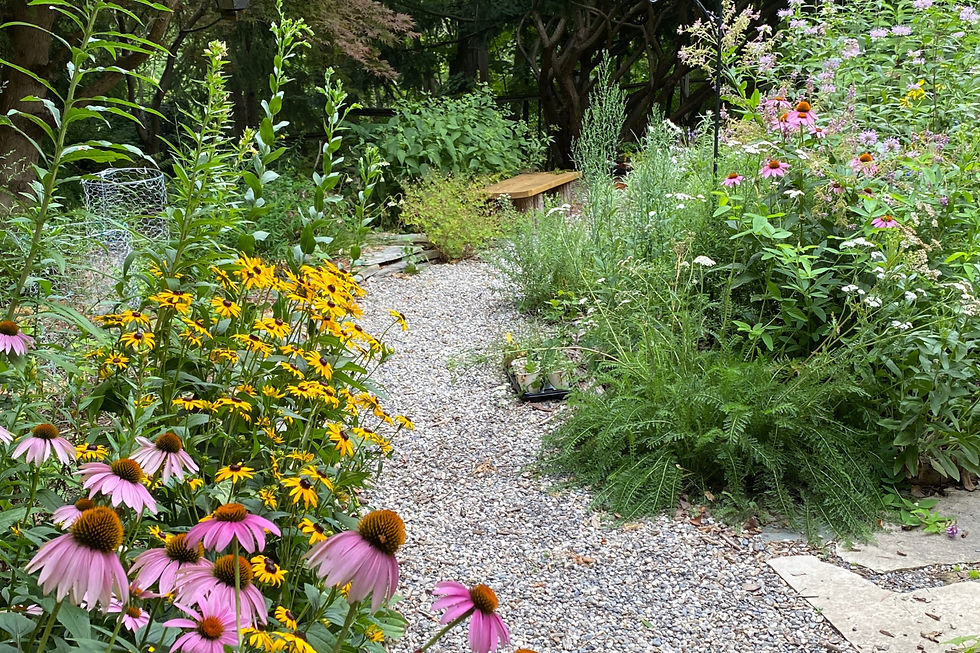
Before and after: Blooming Boulevard steward Joanne Dedrick Smith's garden
Fortunately, replacing turfgrass with native plants, whether a small patch or a whole yard, is gaining popularity. Here's why it's a smart move:
Water Conservation
Native plants are well-suited to the local climate and require less water than the imported varieties of turfgrass. Because they have deep roots, they're able to access water from deeper in the soil, which means they can survive with less irrigation. Additionally, they don't need to be mowed, which saves even more water.
Improved Soil Quality
Another benefit of growing native plants is that they can help improve soil quality. Turfgrass is often grown in soil that's been heavily compacted by heavy equipment, foot traffic, and other factors. This compaction makes it difficult for water and nutrients to penetrate the soil, which makes it harder for the grass to grow and thrive. Native plants, on the other hand, are better adapted to local soil conditions and can help to break up compacted soil. Plus, they attract beneficial soil organisms such as bacteria and fungi that further improve soil quality.
Reduced Use of Pesticides
Turfgrass typically requires a lot of maintenance to stay looking its best. This often includes regular applications of pesticides to combat various pests that can damage the grass. However, pesticides pose a risk to human health and the environment. Native plants, especially in diversity, are typically much more resistant to pests and diseases. Additionally, they attract beneficial insects and animals that can help control pests naturally.
Enhanced Biodiversity
Native plants play an important role in maintaining local ecosystems. They provide habitat and food sources for native insects, birds, and other wildlife. In contrast, turfgrass is a monoculture that doesn't offer the same ecological benefits. By replacing turfgrass with native plants, you can help support local biodiversity and create a healthier and more vibrant ecosystem in your community.

Lower Maintenance Costs
Maintaining a lawn requires a lot of time and money. From fertilizers and weed control to mowing and irrigation, there are countless expenses associated with keeping a lawn looking its best. By comparison, native plants require far less maintenance. They don't need to be mowed, or watered as regularly. While they may require some initial investment to get started, over time, they can save significant amounts of money on ongoing maintenance costs.

Final Thoughts
Native plants offer a wide range of benefits to the environment. They're well-suited to the local climate and soil conditions, require less water and maintenance, and provide habitat and food sources for native wildlife. So, if you're looking for a way to improve your local environment, consider replacing some of your turfgrass with native plants. You'll be doing your part to support the health of your community and the planet.


Comments